Colouring the Melancholy: The Visual Journeys of Picasso and Reindl
Some artists have the innate ability to transform and express their emotions on vibrant canvases. They turn sadness into sketches, pain into paintings, and melancholy into colour. At first glance, their work may feel vibrant, even joyful, but the longer we look, the more we sense the weight beneath the surface. Pablo Picasso was one such artist, transforming personal loss and political unrest into powerful, emotionally charged compositions that continue to resonate today.
Milos Reindl was not only inspired by the master’s abstract work, but they also shared a journey of resilience. Inspired by modern abstraction and shaped by upheaval, Reindl’s work reflects a life marked by displacement, resilience, and emotional honesty. Like Picasso, he painted not only what he saw, but what he carried; memories of home, the fracture of exile, and the quiet persistence of identity.
Picasso and Reindl shared a visual language; one where colour masks sorrow, abstraction reveals truth, and art becomes a way of surviving profound change.
Rejecting Academic Rules: When Intuition Replaces Tradition
Both Picasso and Reindl began their career inside prestigious art academies, and both chose to walk away. Instead, following intuition over tradition led them to transition from students to authentic artists.
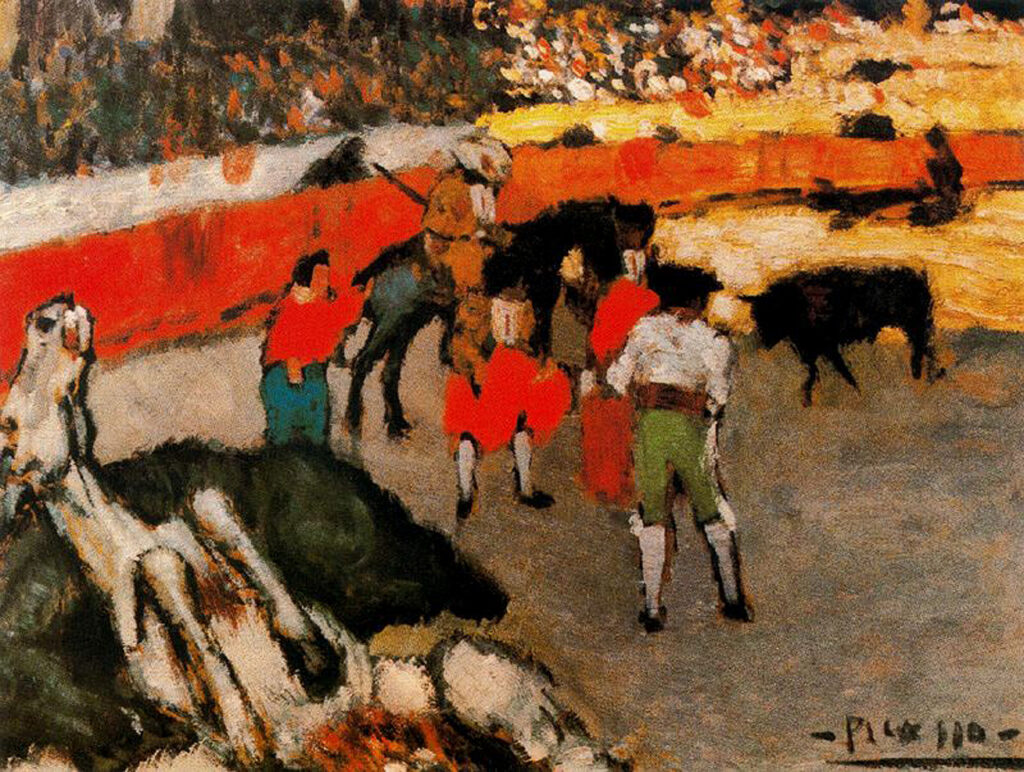
Picasso famously found the San Fernando Royal Academy uninspiring. Rather than following the curriculum, he spent his time in museums, creating studies of Spanish greats like Velázquez and Goya. In his early work, such as his depictions of the Bullfight, we see the seeds of his lifelong obsession with drama and struggle, captured through fluid, confident lines that already pushed against academic rigidity.
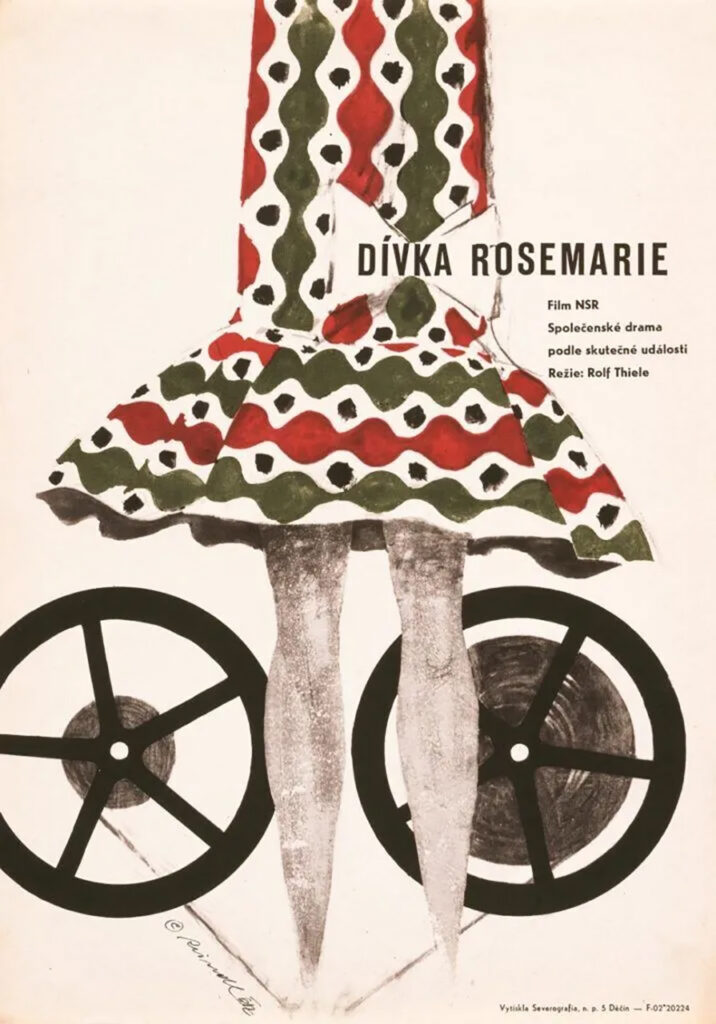
Milos Reindl’s path followed a strikingly similar arc. He initially enrolled at the Academy of Fine Arts in Prague, but left due to its artistic conservatism. Seeking freedom, he continued his studies at the Czech Academy of Arts, Architecture, and Design, where he explored painting, drawing, graphic design, and film posters — disciplines that shaped his bold visual language.
For both artists, abandoning strict academic tradition was not rejection, but evolution. A necessary step toward authenticity.
From Uprooted to Inspired
National identity runs deeply through the work of Picasso and Reindl, even after they were forced to leave their homelands. Picasso’s art always reflected his Spanish heritage, with intense drama and emotion.
Due to the political situation in Spain under Franco’s dictatorship, Picasso moved to France and made a heartbreaking vow never to return to his homeland while the regime was in power. He spent the rest of his life as an outsider in France.
You can see this in his French landscapes, like his views of Cannes or Mougins. Even though he was painting the sunny French Riviera, he often used the dusty, earthy tones of Spain or the sharp, dramatic light he remembered from his youth.
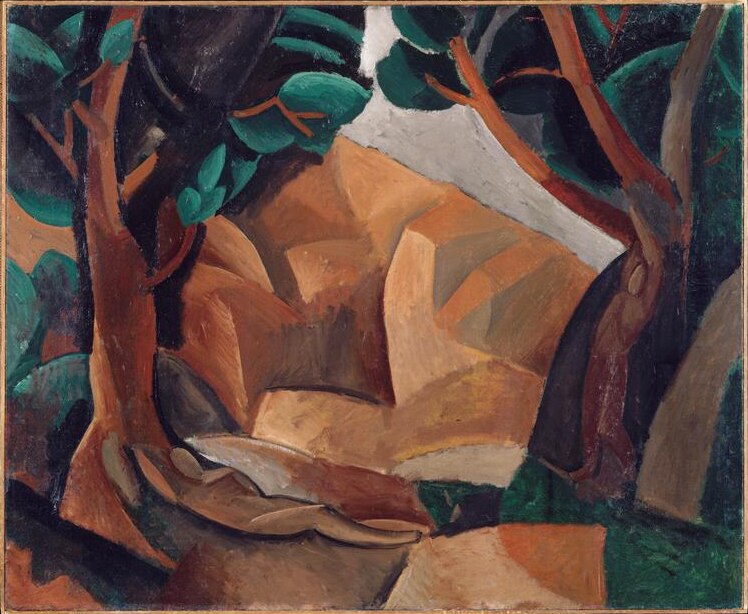
Reindl’s displacement was just as profound. Following the Soviet-led invasion of Czechoslovakia in 1968, he fled with his family to Montreal, Canada.
The artist travelled with his wife and children around the country to really see and know his new homeland. Reindl looked at his new world through European eyes. In his paintings of the Gaspésie or the villages of Quebec, he didn’t focus only on the landscapes; he painted the vibrant energy of the people. Overlapping compositions, saturated blues and oranges, and rhythmic movement transform villages and coastlines into emotional environments rather than mere geography.
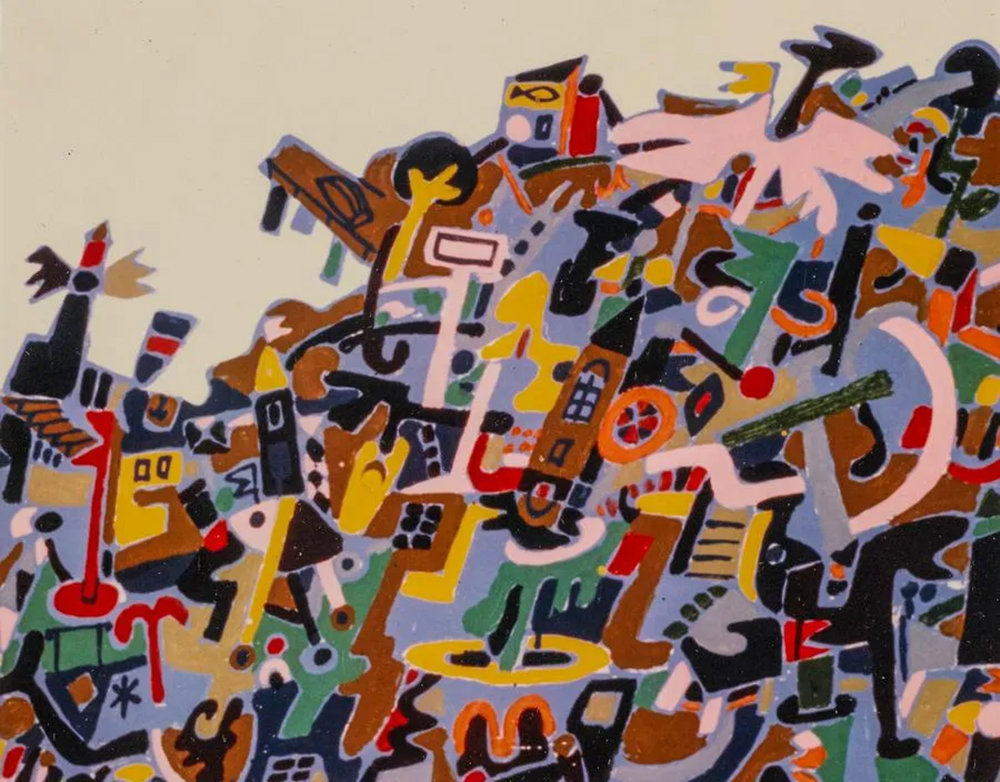
Moving wasn’t just about changing addresses; it was about learning to paint the world they saw through the lens of the world they lost. This sense of longing and resilience is what makes their work feel more mature, human and universal.
For both artists, exile became a source of artistic depth — a way of painting the world as it is filtered through memory and loss.
Art as Political Response
Political conflict profoundly shaped both men, yet their artistic responses diverged.
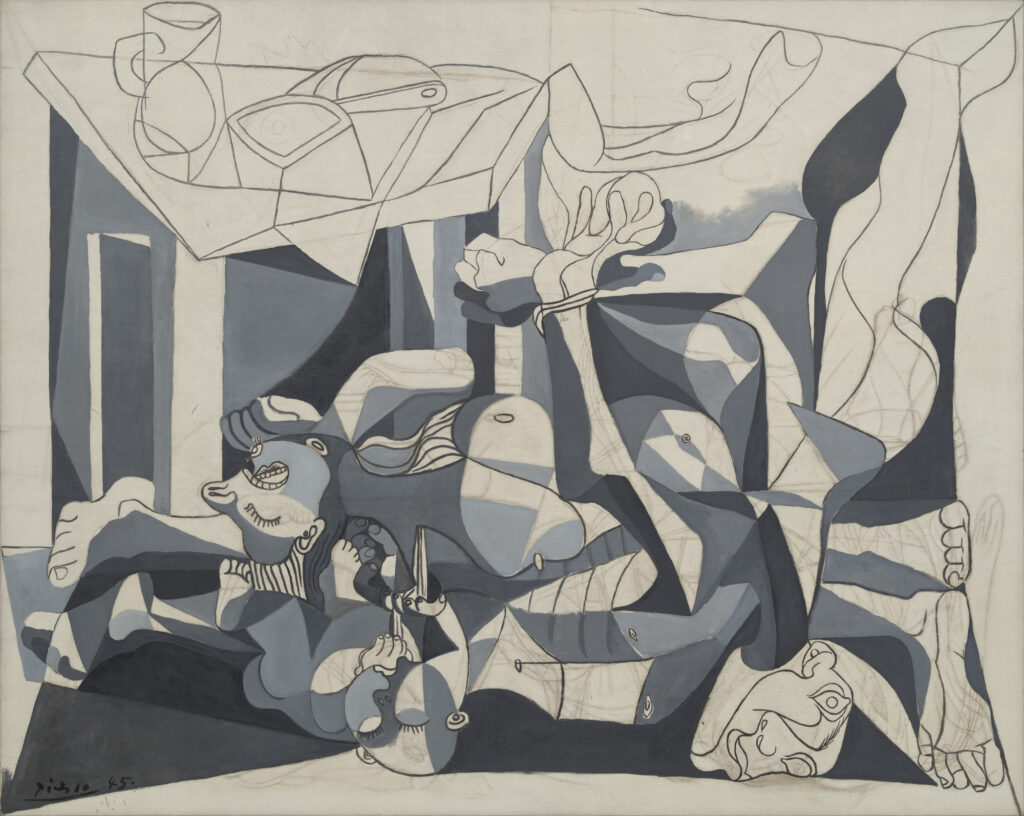
For Picasso, the response was often immediate and loud. Guernica stands as one of the most powerful anti-war statements in art history, with the use of a monochromatic palette of greys and blacks to create a dramatic canvas of sharp, jagged shapes and broken bodies. The Charnel House is another example where Picasso depicts the horrors of war through compressed bodies and brutal symbolism. The piece was inspired by newspaper photographs showing piles of corpses in liberated Nazi concentration camps.
Reindl’s approach was quieter but no less intense. In his piece Battle, he uses a chaotic composition filled with vibrant reds, yellows, and blacks. These vibrant colours nearly hide the tragedy, but on closer inspection, distorted forms and symbols reveal fear, violence, and the anxiety of erasure.
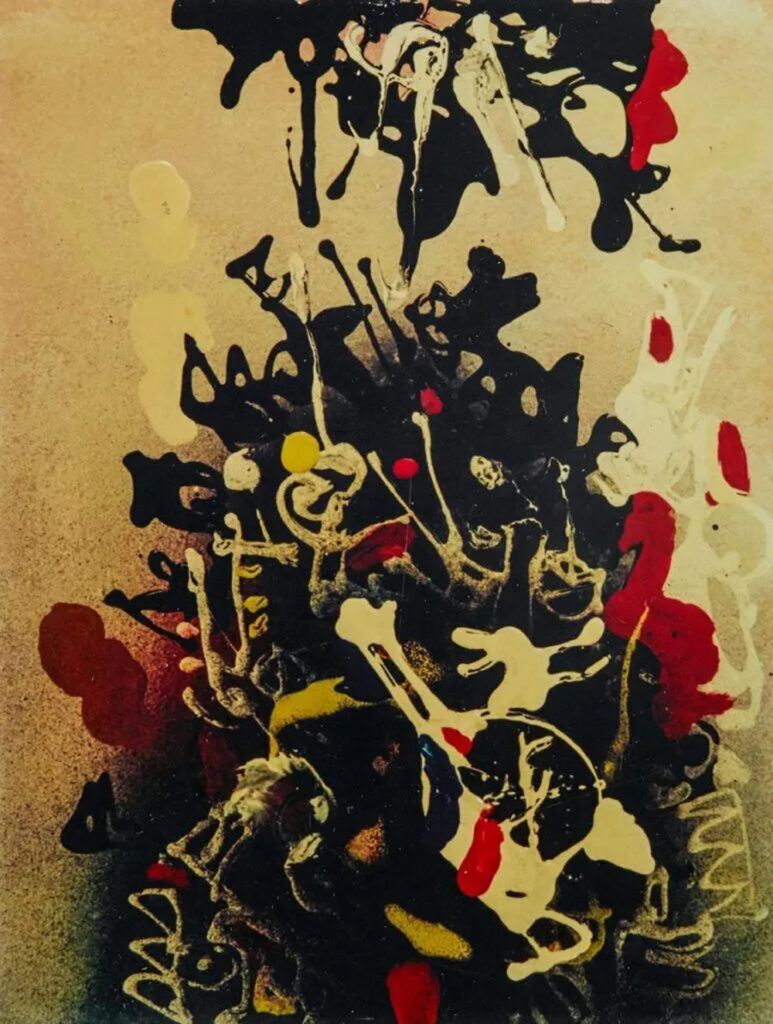
Where Picasso’s work addressed the world directly, Reindl’s art functioned as a private confrontation with trauma and survival.
Abstraction as Emotional Truth
Beyond their history of exile, both artists found a common language in distorted figuration. Their abstract styles, mixing the structural logic of Cubism with the emotional weight of Expressionism, were tools to deconstruct human feelings.
This is most evident in their portraits. For Picasso, abstraction was a way to describe his muses. Through Cubist and Expressionist portraits, he fractured faces into geometric planes, allowing him to depict multiple emotional realities at once.
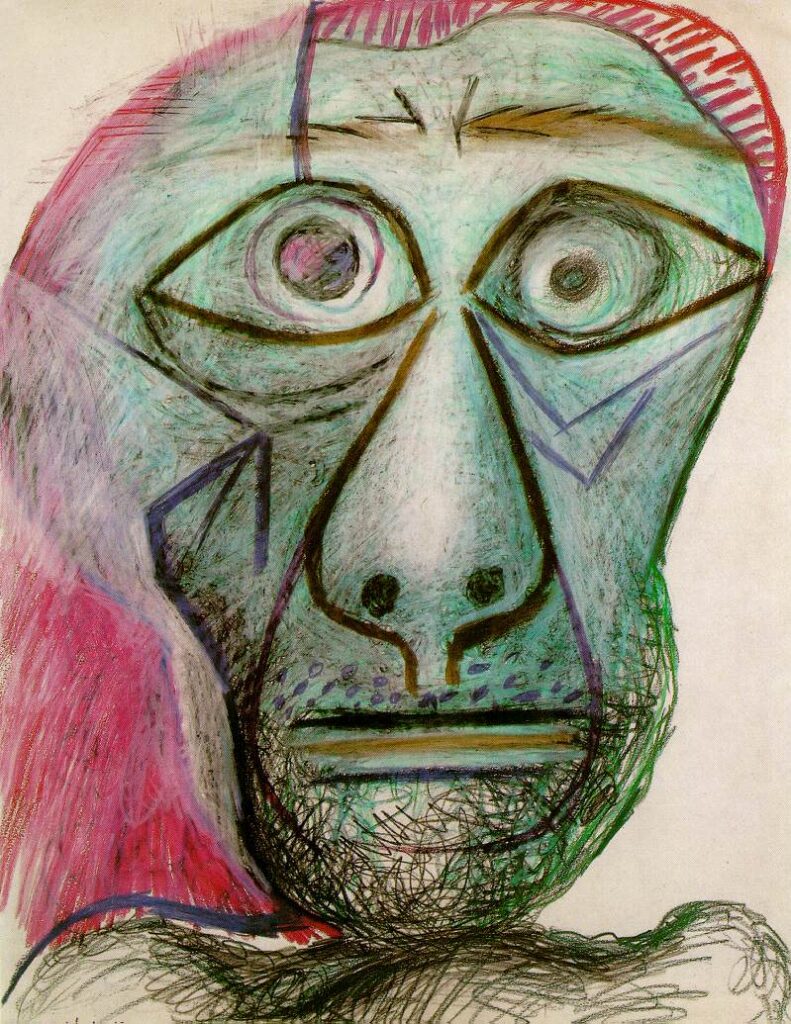
Reindl’s abstraction was deeply personal. His self-portraits act as an intimate visual diary. He often drew quick pencil sketches on paper during lonely evenings. In these drawings, the face becomes a landscape of struggle, where features are shifted and exaggerated to capture a feeling that realism couldn’t.
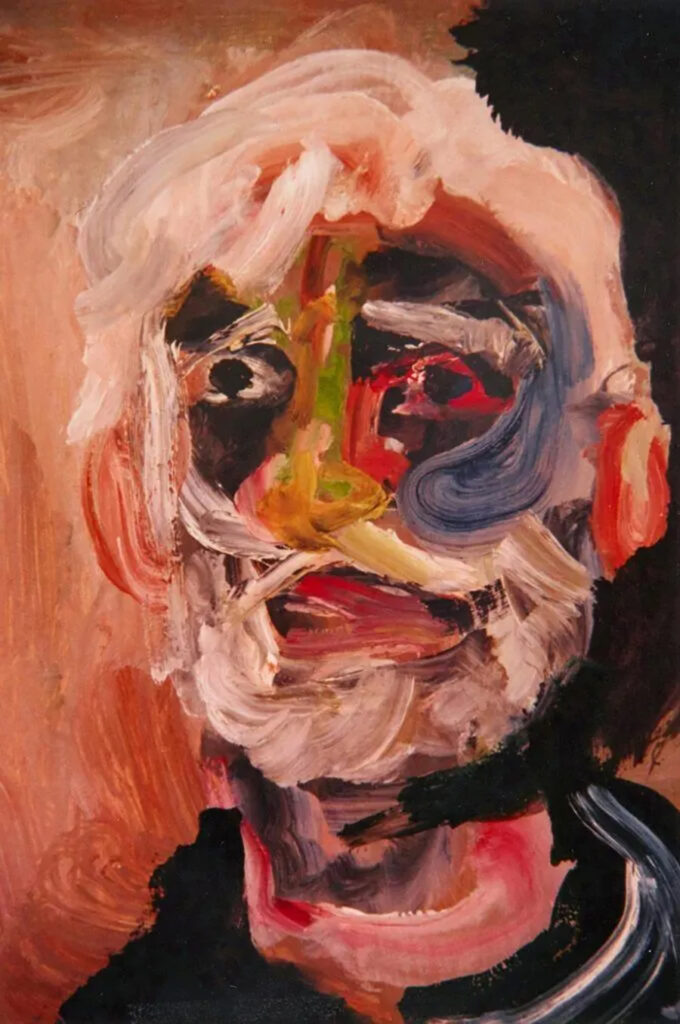
Both artists used abstraction not to obscure emotion, but to reveal it more honestly.
Legacy
More than just painters, Picasso and Reindl both became teachers. Picasso’s legacy reshaped the entire course of modern art. He remains the eternal reference point, the artist who dismantled tradition so future generations could rebuild freely.
Milos Reindl’s impact was more intimate but equally enduring. As a university professor in Quebec, he passed European modernist traditions directly to Canadian students, bridging continents and artistic philosophies.
While they shared a similar path of exile, their paths converge in purpose. The beauty lies in their different ways to a similar result: Picasso’s art was a public revolution, while Reindl’s was an intimate, personal diary of survival.
Both artists proved that losing one’s roots does not mean losing one’s voice. In their work, displacement becomes a source of strength, and art becomes a testament to resilience, memory, and inspiration.
Written by Valerie Shoif