The Parallel Dreams of Salvador Dalí and Milos Reindl
Salvador Dalí and Milos Reindl each turned to the dream to confront reality. Dalí by amplifying it into dazzling visions, Reindl by interiorizing it to protect what was fragile and true. Their worlds appear different, but share a common language built on symbols, both personal and universal. An eye, a clock or a horizon all become clues to how imagination can reveal or conceal, depending on the artist’s life behind it.
The Eye: A Symbol of Revelation and Refuge
The eye connects Dalí and Reindl more clearly than any other symbol. In both of their worlds, it stands for vision, but also for what it costs to see.
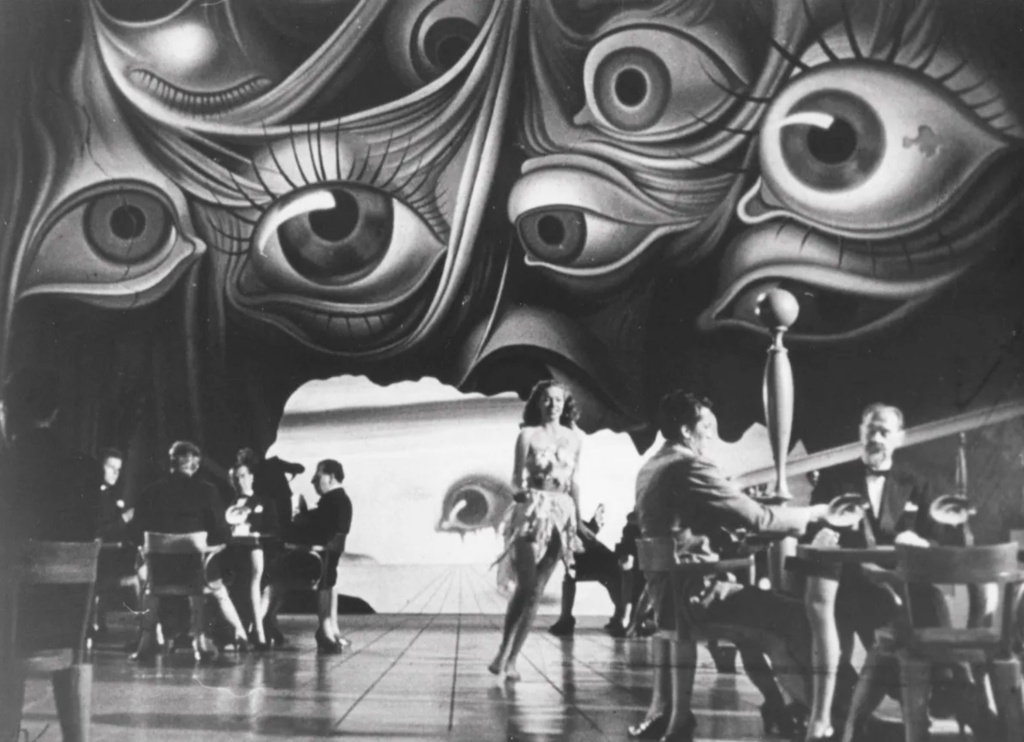
For Dalí, the eye revealed. In Spellbound (1945), his collaboration with Alfred Hitchcock, he designed sets filled with enormous eyes staring from dreamscapes. They made the invisible visible, giving shape to the subconscious. This symbol wasn’t just about insight, but also about control and mastering the chaos of the mind.
In Milos Reindl’s 1964 poster for Shot in the Haze, the eye is a survivor. It is a realistic, isolated gaze peering through a tear in a textured, bandaged background. It feels cold and unblinking. This wasn’t an invitation to a dream; it was a graphic confrontation.
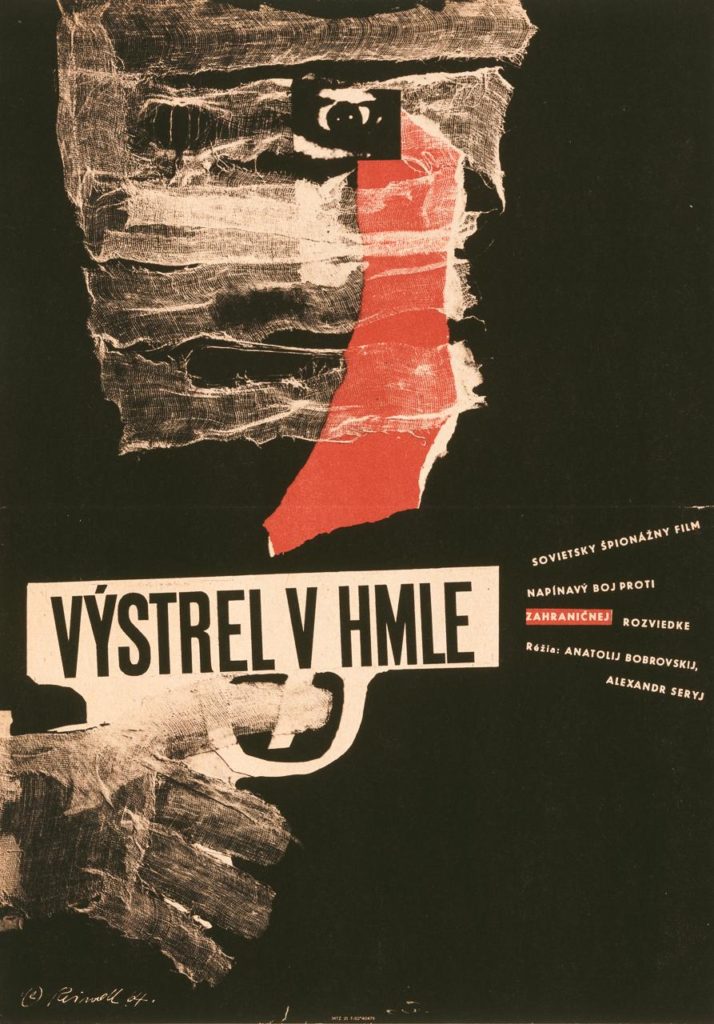
Living under government scrutiny in Czechoslovakia, Reindl understood the eye not as self-knowledge, but as surveillance. The eye is shielded, looking out from a world that is wounded or obscured.
In contrast, the shared symbol speaks volumes. Salvador Dalí’s eye opens, expanding perception outward. Reindl’s eye closes inward, guarding what must stay private. Both speak the same language, in different dialects: one of revelation, the other of resistance.
Two Ways of Seeing
Dalí’s artistic method was built on contradiction. His paranoiac-critical approach, developed in the late 1920s to access the subconscious and create what he called “hand-painted dream photographs”. His aim wasn’t only to shock but to unravel logic.
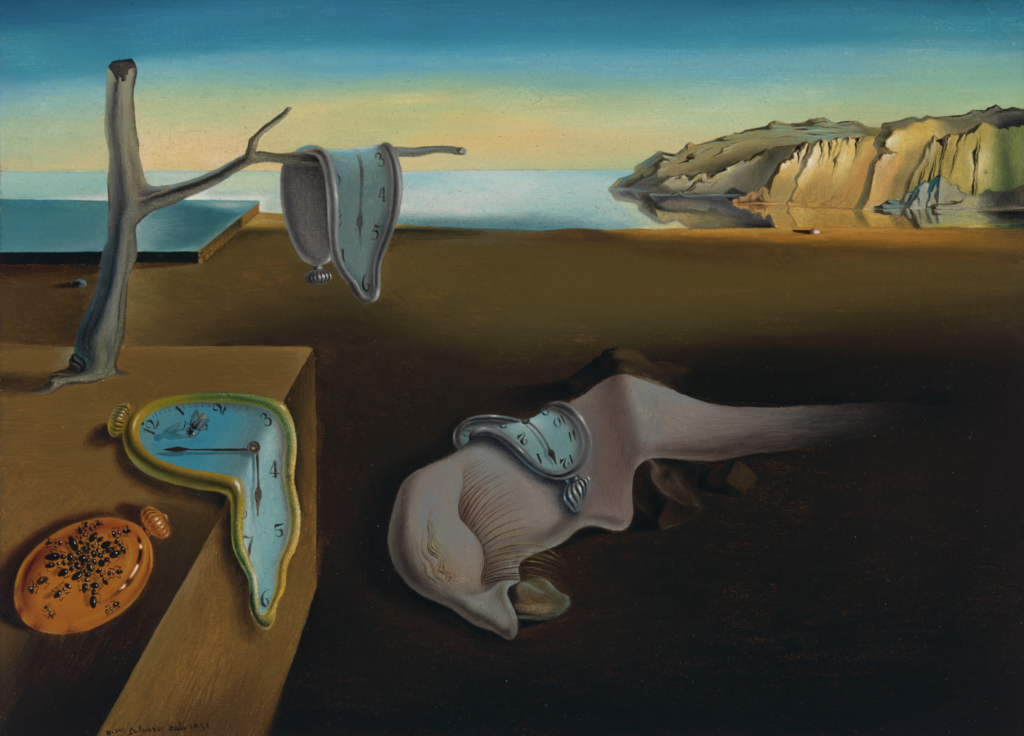
The Spanish artist’s best example might be The Persistence of Memory (1931), where the melting clocks make time feel pliable and uncertain, almost dreamlike. It’s less about a surreal spectacle than about exposing how perception shifts. It is a theme that Reindl, in his own quieter way, also explored through fragmented forms and tilted horizons.
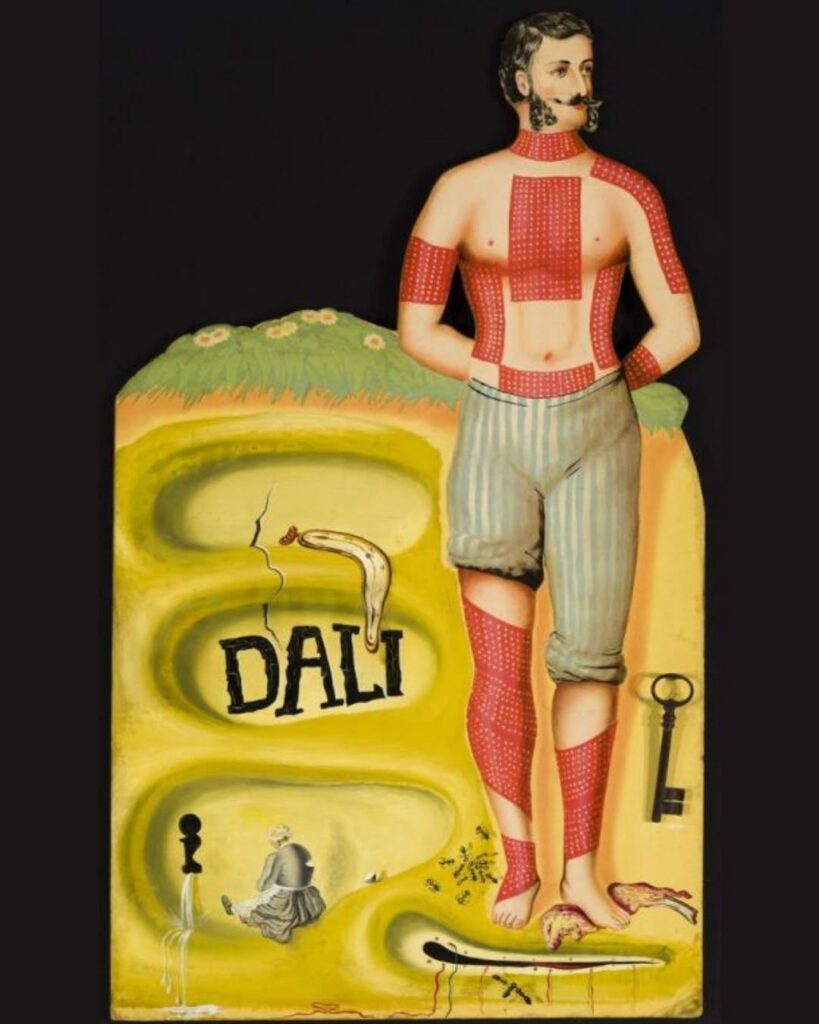
In Surrealist Poster, Salvador Dalí blurred boundaries by painting over a 1920 newspaper ad for medicinal mustard plaster. The transformation from an advertising image to artwork questioned the split between commerce and creation.
Every day material became part of his dream language, just as film posters would later become one for Reindl.
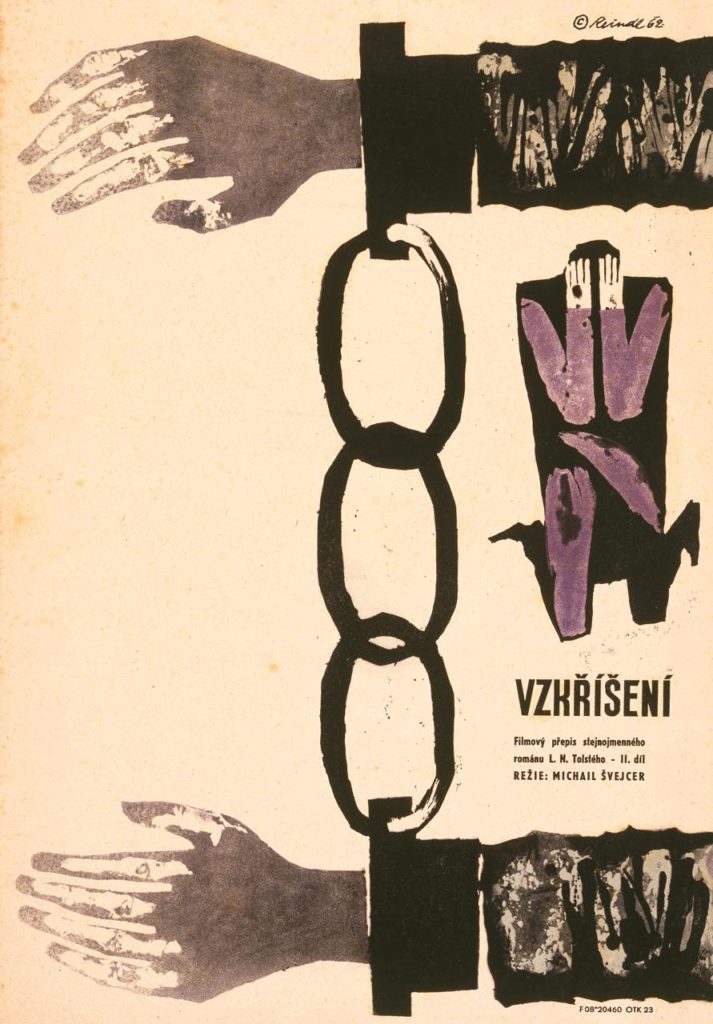
Milos Reindl found his own space between fine art and cinema. His posters for Czech and international films are striking for how restraint the just a few elements, carefully chosen, yet charged with emotion.
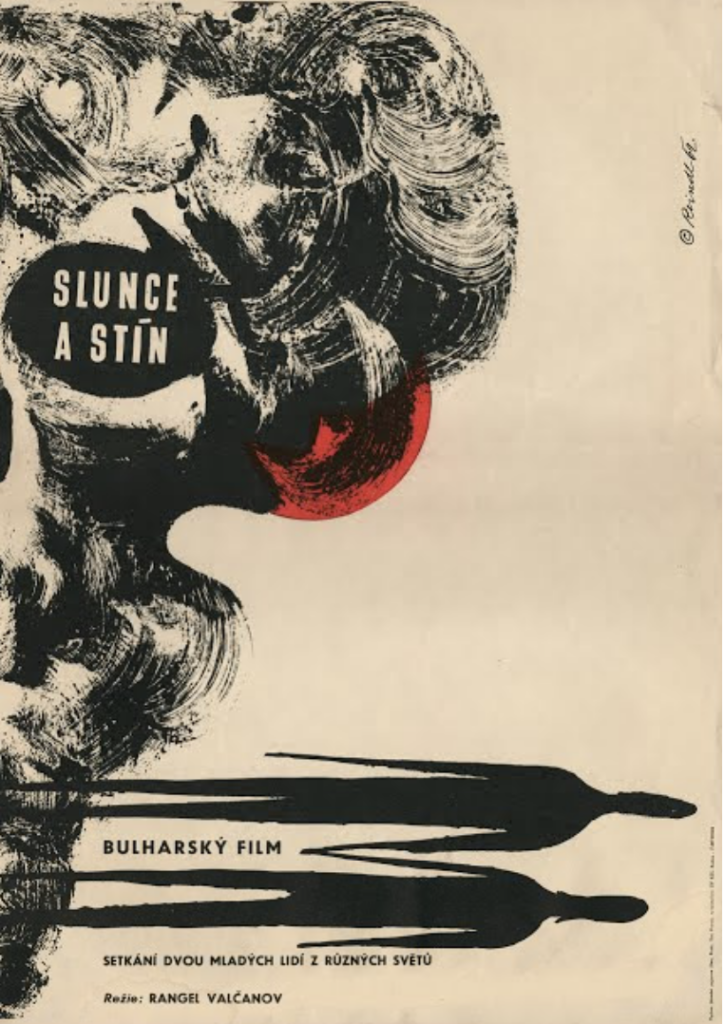
A distorted silhouette might express paranoia. A tilted horizon could suggest unease or moral conflict. His visual language was sparse but deliberate, shaped by what he could and couldn’t express.
Quiet Defiance
At a time when Czechoslovakia’s film culture was thriving and inventive, in a Prague advertising studio in 1957. His work matched that movement; sophisticated, experimental, and rooted in a unique Central European surrealism. But the optimism didn’t last.
After the Soviet-led invasion in 1968, Reindl fled to Canada as a political refugee, carrying with him both his skill and his history. The tension between control and self-expression that he had known in Prague lingered in everything he made afterward.
His works seem to speak two emotional languages at once: melancholy and quiet defiance. Each design is both a product of its time and a record of survival, proof that even graphic art made to promote films can hold entire worlds of meaning.
To own a piece by Salvador Dalí is to claim a part of surrealism’s legend. His work is famous, studied, and instantly recognizable. These images are easily placed and endlessly reproduced, serving to expand the artist’s own public myth.
As a more private figure, Reindl stands apart. He produced hundreds of posters and large-scale paintings that served the artist as a refuge, and now offers a sense of intimacy to viewers and collectors. It is a quiet conversation between imagination and exile. One preserving a voice that history almost silenced.
If Dalí’s work is a dream that demands to be seen, Reindl’s is a memory that refuses to be forgotten.